

In today’s episode, I have Jill and Josh Stanton from Screw The Nine To Five on to co-host this episode where we talk all about how to create a membership website people are going to flock to to join.
I’ve known Jill and Josh for just over a year and we’ve become extremely good friends. Josh and I are even t-shirt buddies:
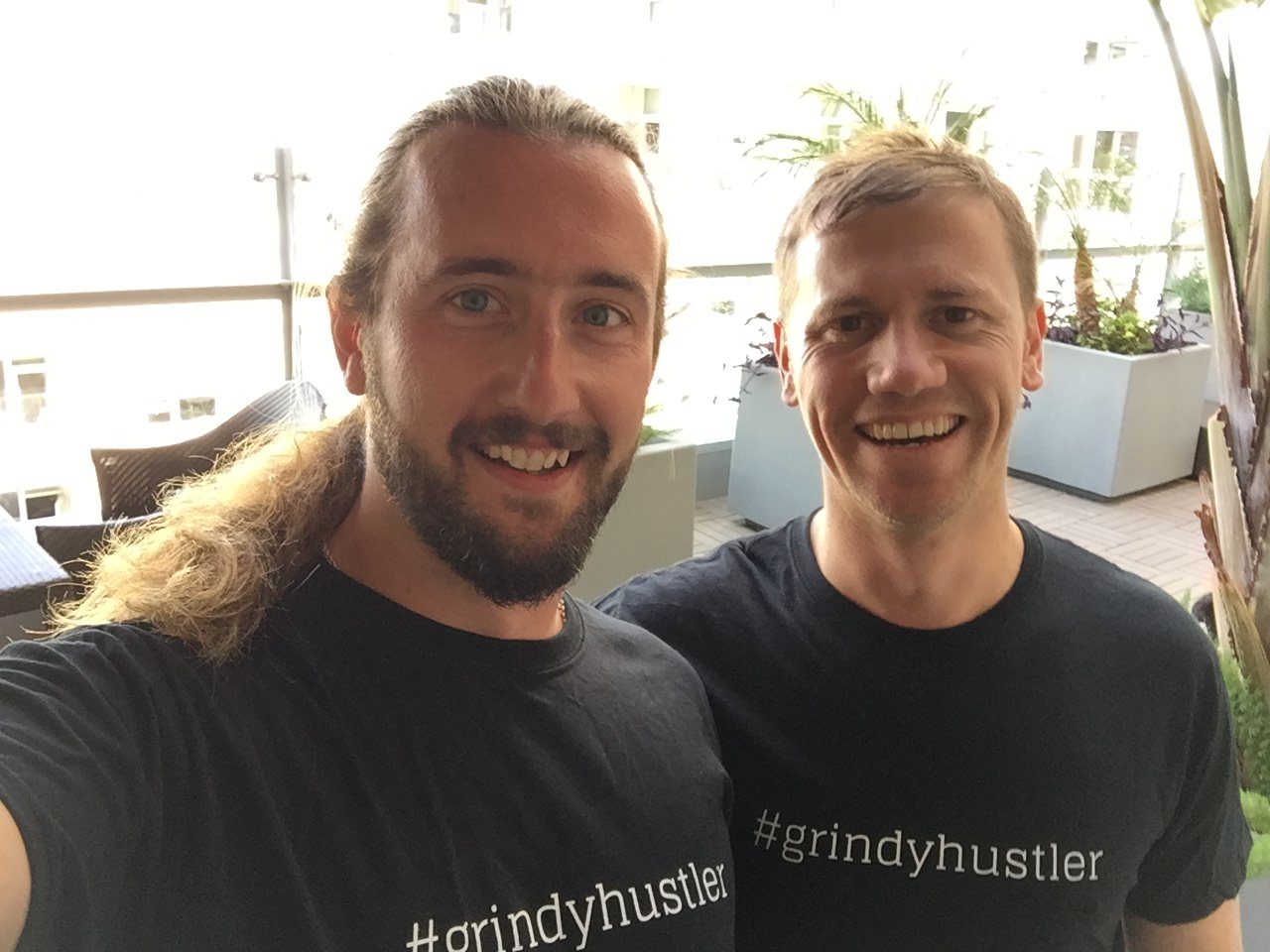
Not only are they good friends of mine, but they’re both my mentors and I’ve learned a lot from them about this crazy little thing called online business.
They’ve both been digital nomads in the past when they were growing their businesses which started off a niche web sites, including skin care and how to train your goldfish, and Thailand was the birthplace of Screw The Nine To Five, the place where they teach people how to escape their day jobs and take their expertise online.
They have a killer membership website and I wanted to bring them on to talk about why membership websites are a great model for an online business. We also dig into different things you can do to make sure your attracting the right people to your membership site and how to keep them there.
This was a great chat… I love chatting with these two mofos every week and I’m happy to provide this conversation to all you dudes and dudettes too.
Enjoy!!
*fist bump*
IN THIS EPISODE WE COVER:
- Content vs. Community
- Connecting membership software to your email service provider
- Making members feel special and welcome
- How much content do you need to get started
- Pricing
- Building a funnel into your membership site
LINKS AND RESOURCES MENTIONED:
- ConvertKit
- IPS Vision Board <– Forum software
- Dude Brood FB Group
Wanna connect with Jill and Josh?
- Website: ScrewTheNineToFive.com
- Facebook: ScrewCommunity.com
===
Transcription:
LT: So welcome to the show, Jill and Josh. Thank you guys so much for coming on and co-hosting this episode with me.
JILL: LBT.
JOSH: Dude, it’s always good to be here with you, my friend. Always good.
JILL: LBT.
JOSH: LBT.
LT: So for all you guys listening – and I’m now using LBT everywhere – Jill is the person to blame for this.
JILL: Yes. Holler. I’ll take it. I don’t care. I’m proud of that shit.
JOSH: Or to reward for it; I don’t know.
JILL: Yeah. Definitely reward.
JOSH: Yeah.
JILL: Yeah.
LT: But everybody just needs to say it the way you do it, Jill.
JILL: Yep, LBT.
LT: Exactly. Just like that, every time. So I gave you guys an introduction in the intro of the show, but would you guys like to introduce yourself to the TMD community? Let all the dudes and dudettes know who you guys are, what you’re doing right now and sort of, like, a brief travel history and sort of, like, how you got to where you are.
JOSH: I would love to, but I’m pretty sure Jill would love to even more.
JILL: Yeah. Well, I’m way more of the chatty one, so. Josh and I are the co-founders of Screw the Nine to Five, and it’s really just our slice of the internet where we help people cut the bullshit online and build their businesses strategically. So we’ve been building businesses together now for five years, which – damn, that went fast.
JOSH: Damn.
JILL: And we’ve been doing it while living all around the world. So, LBT, we know that you’re a big traveller. We ourselves have a serious case of itchy feet, and we’ve, you know, travelled to a bunch of places but lived and worked in Australia, New Zealand, China, Thailand, Malaysia, Canada – like, Toronto, Vancouver. We did a stint down in San Diego quickly.
JOSH: Did you say Mexico?
JILL: Mexico, Costa Rica. So it’s really just been a journey for us of, you know, kind of sashaying our way around the world and bringing our business along with us for the ride.
JOSH: I’m not doing the sashaying. Jill’s mostly doing the sashaying, because I don’t even know what a sashay is.
LT: Don’t lie, Josh.
JILL: He sashays like a motherfucker.
JOSH: I don’t know what that is.
LT: We met in San Diego, Josh; I know you sashay.
JILL: Ah-ha. Busted.
JOSH: You know I sashay? Okay. I guess I do sashay, then; whatever that is.
JILL: You can’t even say it.
JOSH: Just, like, a background on Screw the Nine to Five, for anyone listening in. So we initially started – and I’m sure, like, a lot of people listening in to this show, you know, look to start an online business because they wanted to travel, right, which is exactly what we did. So we started, like, a skincare website and all these other affiliate sites, just as a way of generating revenue so we could travel, because that’s exactly what we wanted to do. And we started screwtheninetofive.com because it was a way for us to connect with other people who were kind of travelling as well. And really initially it started off as us just talking about our travel stories and things like that, and then it just kind of evolved into, like, people asking us, “Wait, how do you guys make money online and travel like this? I don’t understand.” And so it really just evolved into a business.
LT: Yeah. And now Screw the Nine to Five is this big, like, membership website. Because you guys started off, like, selling, like, individual sort of, like, products and then decided to chuck it all under one roof, didn’t you?
JOSH: Yeah. We actually started by selling, like, services and things like that because, you know, we were doing a lot of SEO and building websites and stuff like that for ourselves. And so we’re like, I wonder if, like – you know, because we were blogging about that kind of stuff too, so we started offering, like, SEO services, keyword research services and content writing services and stuff like that, just as, like, a way to sort of initially generate some revenue with Screw the Nine to Five. And then, you know, later we came out with a course on, like, our type of affiliate marketing model called lifestyle affiliate, which was pretty successful. And then after that we decided that, hey, like, what we’re really passionate about is growing, like, long-term brands online. And so that was when we came out with Screw U, which was a course at that time, and then it later evolved into what it is today, which is a monthly membership site.
JILL: Really, our journey has been a process of evolution.
JOSH: Trial and error.
JILL: Yeah, just constantly evolving, taking stock of what did work and doing more of it, and cutting what didn’t.
JOSH: Yeah, exactly.
LT: Yeah. And, like, I’m inside of Screw U and I know sort of, like, how you guys sort of, like, slowly built this up to, like, what it is today. And this is the reason why I wanted you guys to come on and sort of, like, help me explain to people why, like, membership websites can be, like, a great way to sort of, like, build your business online whilst you’re travelling because everybody thinks that, like, building a big membership website is hard, when there’s a lot of work involved to begin with but, like, there’s so many benefits of, you know, having a membership site, like predictable income and, you know, not having to create so much content constantly because, you know, you’ve got to give – you know, you’re making, like, one-time sales so you need to keep coming up with new stuff, new stuff, new stuff.
JILL: Yeah.
LT: You know, it’s a great model, I feel, for people that want to travel.
JILL: Here’s one thing. Like, I’m going to keep it real. Memberships are amazing, obviously; we wouldn’t have one if they didn’t work for us. Do I think they’re for everyone? No.
LT: No.
JILL: Like, I think anyone can have a membership site but I don’t think everyone should have a membership site because not that many – not everyone wants to show up in the kind of way that you need to consistently inside a membership community to keep people paying month after month.
LT: Yeah.
JILL: You know what I mean, because they may come for the content but what they’ll stay for is the community. And in order to foster a really tightknit community, you need to show up and be there. You need to listen to people; you have to be present; you have to answer their questions; deal with customer support. There’s a lot that goes into it. So, yeah, it’s great because of the predictable revenue, but it is also, especially in the beginning, a lot of work to get it off the ground. But if you’re down for that and you recognise that selling one-off products just doesn’t feel like the right business model for you – which is how Josh and I felt; we found it really stressful with that business model – then memberships can be the perfect solution to that. It’s just a key to constantly start spotting the repeatable tasks and things that you do inside your membership so that you can start to streamline and automate and create systems out of them.
JOSH: It’s sort of like – like what you were just – just following off that point is, like, you kind of know if you have the ability to create a successful membership site, because a lot of people are, like, connecting with you and maybe, like, you’ve done a great job growing up a free Facebook group or something like that and you’re growing an audience pretty naturally. When you do that, essentially you’re setting yourself up to create a paid community that has value. Because, you know, a lot of people think that a membership site is, like, full of content and whatever. But when we actually polled our audience and surveyed our audience, we found out that the number one thing is the community.
JILL: Yeah.
JOSH: That’s the one thing that people pay for every single month.
JILL: I think it was, like, 70 per cent of respondents said the community.
LT: Wow.
JOSH: That’s wild, right.
LT: Yeah. So you guys bring up a very good point in that, like, a lot of people sort of, like, get hesitant with building membership websites is the question of, like, how much content do you need to get started with a membership website and sort of, like, the whole content versus community, like, debate, you know. Obviously you guys have found that in your membership website that community is what people are loving the most and that’s what’s keeping them around. But for the people that are questioning, like, how much content do you need to get started, what would be the answer that you would give them?
JOSH: So try and think of it like this. Like, your content is what you present as, like, your marketing material, right. So we always like to say – and this has not come from us; this has come from, like, a lot of people who have successful membership sites – is that people will come for the content but they will stay for the community. And so what that means is, you know, when you’ve got, like, your sales page which is presenting what your community’s all about, when you have, like, really detailed content – you know, different courses and things like that that you’re mentioning on that sales page – they’re going to be like, “Okay, that’s really cool.” That’s kind of like the shiny object type stuff, and so they’ll join because they want to get access to that content but they’re really going to stay for the community, right. And so just to answer, you know, your question, LBT - - -
JILL: How much you need.
JOSH: - - - how much you need, you don’t actually need a lot, would you say, Jill?
JILL: Not in the beginning.
JOSH: Not in the beginning.
JILL: I think the key is to identify – like, to have some foundational pieces of content. So I think one of the biggest responsibilities of a membership site owner is to identify where their members are coming in at, like, what stage are they at or what are they struggling with or whatever; where are they at in their journey, and what can you put in front of them so that they can dive straight into it and start their – kind of like the process of moving them towards their ultimate goal. So this is where it becomes super important to know your audience in such a big way. Like, Josh and I are huge proponents of constantly surveying, polling and emailing people to just give us feedback, because we want to keep our finger on the pulse. That allows us to get some insight into what people really want and how we can help them. So if you know your audience really well, then you can identify where most of them are and where they’re starting at so that you can give them these, you know, again, foundational pieces of content when they first join that will kick off that journey of moving them towards their ultimate goal.
And that’s what I think you really need to start with versus worrying about having all the courses and all the content; just get clear on what those key pieces are and create those. And open it up to, like, a founding members kind of promotion where you get your first whack of members in the door and you communicate with them and you take their feedback and you plug the holes based on what they’re seeing, and you use that community and that attention to further refine the community you’re creating to best serve people so it becomes a no-brainer when they’re trying to figure out if they should join.
JOSH: Yeah. You just give’r, though, right? You just give’r.
JILL: He’s making a joke because we just did a live – sorry, not a live call but a recorded Q&A video for U, LBT, and I was saying, “Yeah, just give’r.” And Josh was like, “Give it to her?” And I was like, “No, it’s Canadian. We just give’r.” That’s just such a Canadian thing. Anyways, that was his inside joke, for anyone who might not understand.
JOSH: I was actually being serious about that; just give’r.
JILL: Okay.
JOSH: Just give’r.
LT: But, yeah, I mean, the whole, like, content versus community thing is, like, I’ve seen a lot of people, like, launch a membership website with just one course based on, like you said, Jill, finding something that people are sort of, like, struggling with or they need help doing. So they create the course to help them with that, but then the community side of it helps them answer the questions what they’re struggling with; it helps them to connect other people that are struggling with the same thing. And then later on, speaking of, like, the polling, you know, you can ask those members, “What do you guys need help with next?” And then you can go and create the next thing and just, like you said, slowly build it up over time.
JILL: Yeah. Absolutely. Like, we’ve just polled inside our Facebook group to find out what our next batch of content should be, like, for funnels and stuff. And we went into it expecting it to be membership sites. Like, we were like, “Okay, we’ll add in these other options but we know membership sites is totally going to win.” It came in fourth out of fifth; we’re like, “What?”
LT: Wow.
JILL: So that’s the importance of really – not just assuming you know your audience but keeping your finger on the pulse and constantly checking in with them so that you are giving them exactly what they want, and not wasting your freaking time creating shit no one wants or will pay for. So, I mean, that’s a big thing as you continue to build out your membership or just your business in general is keeping your finger on the pulse of what people actually want.
JOSH: I just want to jump in here and sort of say, like – I mean, because what we’re really talking about here is, like, the importance of content, right, as far as a membership site goes.
LT: Yeah.
JOSH: So there was a membership site that we were a part of when we were travelling and stuff called the Dynamite Circle, and it was for, like, digital nomads and things. And so that membership site had no content whatsoever, like, no training course.
JILL: No training content, yeah.
JOSH: Yeah, no training content, right. But, for us, it was like, hey, we wanted to join that because there’s all these, you know, other business owners in there who maybe we can connect with, firstly.
JILL: Connect with.
JOSH: But also, like, ask questions of and stuff like that, because maybe they’re more experienced than us.
JILL: Mastermind brainstorm.
JOSH: Yeah. Like, all that kind of stuff to us was, like, so much more valuable. We weren’t even thinking about training courses and stuff.
JILL: No.
JOSH: We were just thinking, like, there’s people in this community that we want to connect with. Like, how do we get in? Let’s get in this thing.
JILL: Yeah. And we stayed paying members of that for two years, so.
LT: Damn.
JILL: I mean, I think people undervalue connection and community in such a big way, and it’s only going to keep getting more and more important the noisier our space gets because so many people don’t put in that extra effort and it’s going to be the ones who do that truly shine, I think.
LT: No. Yeah, can’t agree more with that. Now, Josh, I know you’re definitely sort of, like, the person behind the scenes when it comes to, like, building Screw U.
JOSH: Are you talking about me? Because I’m, like, the face of the company and the extrovert in the partnership. What are you talking about?
LT: See, I know you’re an extrovert, Josh.
JOSH: Thank you.
LT: But Jill just outshines you. She’s just louder.
JILL: Louder.
LT: Louder.
JOSH: I mean, I do sashay. So does that count for anything?
LT: You do. You do. You shine when Jill’s not around. No, don’t take that the wrong way. But you are the guy that does all the technical stuff in the backend. So I just want to quickly – well, not quickly. I want to, like, start talking about sort of, like, what it takes to sort of, like, get a membership site together. So what are sort of, like, the things that you need or, like, the essential things that you need to build a membership website?
JOSH: Oh man. So I can tell you what we use.
LT: Yep.
JOSH: But I also want to, like, talk about, like, maybe some, like, recent insight that we’ve had as far as technology and stuff goes. So, you know, after surveying our audience and stuff like that, we’ve found that, like, what we thought people wanted was actually different to, like, what they were actually using. But before I even jump into that, I just want to talk about, like, maybe some technology people could use initially to get started. So what we do is we have a CRM, right, a customer relationship management system called Infusionsoft, okay. And it’s expensive; it’s like $300 a month. But basically we use that for, like, these main purposes. So for taking payments and handling payments for contact managements. We can see people’s contact records and customer records and things like that, and also, like, email marketing as well as marketing automation at the same time too.
So that’s, like, a really important part of our business; it basically runs our entire business. And so we have that there that takes the payments, and then we have, like, an integration hooked up with the actual membership site platform that we use, which is called IPS Community Suite. And you can find that by going to invisionpower.com. And so that is basically like – it’s basically like a forum, okay, but it’s a little bit better than, like, those old-school forums. Like, it just has, like, a whole bunch of other things, like what you know, LBT, you know, like – I’m not going to go into detail with it, but it’s basically a lot more than just a forum.
LT: You can customise it a lot, can’t you?
JOSH: Yeah, you can customise it a lot. And it looks pretty good, in my opinion, right. So that there – for people to – we have, like, a custom integration with that between Infusionsoft. So in Infusionsoft, you can see in everyone’s, like, contact records there’s, like, a password field, right, and that password field is synched up to the password field in IPS Community Suite. So they’re both synched up, right. So as soon as someone, like, puts in their password in Infusionsoft – and we have, like, a custom form for that – that then synchs up with the password in IPS Community Suite. So then when they go to login, it checks back and forth. So it’s, like, when they put in that password, it checks in Infusionsoft, “Does this password exist in Infusionsoft?” If yes, it signs them in; if no, it doesn’t. Okay. So that’s, like, a really important thing. And so we just paid – you can just pay for that, and it’s around about, like, $500 to get that custom integration done, okay.
And so, like, that’s the direction that we went in, which – you know, like, we’re starting to learn a lot more about what people want and we’re finding out that there’s some people who really love using forums but there’s a lot of people who just want to use a Facebook group as the community side of things as a way of connecting with people. And they want – currently all of our content, all of our training courses, are just kind of like inside of IPS Community Suite as, like, forum topics, basically. But we’re finding out that they actually don’t really want them like that; they want them packaged differently as, like, more of a traditional course would be packaged online with, you know, like, the course content on the left – or the course video on the left and then the sidebar has, like, all the other lessons so it’s easier to navigate. So we’re finding that that is actually becoming more important now.
But if you’re just getting started, I just think, like, maybe using something like IPS Community Suite is a good option because the cost is really low for what you’re paying for. The standalone, I think – are you using IPS right now or are you planning on using it? I think it’s like $150 standalone, and then you pay, like, $55 every six months or something like that. It’s something ridiculous, like, really low cost, right, for what you get. You get a really amazing platform. So if you use something like IPS Community Suite, you just have to find out how to integrate that in with your payment platform; that’s the only challenge there. So there are some technical hurdles you have to get over, but, I mean, that’s just the case for anything. You’re working online; you should have to understand that there are some technical issues you have to figure out.
LT: Yeah. I mean, IPS is something that I’ve been looking into because a membership community is something that I would really love to build for That Marketing Dude. I think – especially, like you said earlier on, with the DC, for the digital nomad space and the location-independent entrepreneurs, I think the community is really important because a lot of people that are in this – living this lifestyle, you know, are doing it by themselves.
JOSH: Yeah.
LT: And it’s very tough when you’re travelling – unless you are in, like, a digital nomad hotspot, you know, it’s tough to find and meet people that understand sort of, like, what you’re trying to do. You know, a lot of the people are there to, like, just travel and have fun. And when you turn around and say to them, “I can’t do such-and-such with you because I need to do something in my business,” they look at you like you’re a fucking weirdo. It’s like why the hell are you, like, sitting at your laptop when, you know, you can go surfing or go scuba diving or whatever the hell it is.
JOSH: Yeah.
LT: So I think community is definitely important. And, you know, like you said, a community as big as the DC that doesn’t have any training content whatsoever, you know, you guys were, like, a part of their membership for a long time just because of the community.
JOSH: Yeah.
LT: So I think, for myself, I definitely want to build a membership community. And I am looking at IPS because I know that’s – like, I’ve seen it in action. You know, that’s what you guys use.
JOSH: Yeah.
LT: And I really like that. And I also know that there are other ways that you can build a membership website. There are sort of, like, WordPress plugins that you can get and, you know, you don’t – some of them creates a forum for you and you can also create, like you were saying, like, the traditional sort of, like, course layout with the videos and then all the other lessons on the right.
JOSH: Yeah.
LT: You know, you just need to sort of, like, play around with what works for you with, like, your budget, your tech skills or, you know, if you decide to create it yourself, you know. Just play around and see what works for you.
JOSH: Yeah. And I would say, I mean, if you are looking to incorporate a forum into your membership, then I wouldn’t use, like, some of the free options, like, say, bbPress which is the free WordPress plugin. Like, we actually started by doing that because I was, like, such a cheap-ass at the start. I’m like I’m not going to pay for this thing; whatever. And, you know, like, it obviously came back to bite us because it was a pain in the ass to customise and make look the way we want it to look. And it just ended up looking junky and, like, no one understood it and it was just crappy. And then I just checked out IPS Community Suite and I downloaded a free version of it just to see what it looked like, and I was, like, oh my god, this thing is hands down, like, a hundred times better than anything – any free, you know, forum platform could offer. So it could be – if you’re looking to get started and you know that, you know, people would be interested in using a forum – it’s a whole lot more than that too, because you’ve got, like, profiles, like, you’ve got – you know, I was just looking at one thing just then which – they just came out with an update. You know, people can like your posts and stuff like that in there. And so I don’t know if you’ve noticed this, LBT, but when you go into your profile now, if you got the most likes on a certain day, there’s, like, a little award sitting there on the left-hand side on your profile saying, like - - -
LT: The leader board thing that they’ve introduced now, yeah.
JOSH: Yeah. There’s a leader board where you can see, like, who’s, like, had the most likes and stuff like that. But, you know, if you won the day – like, if you had the most likes on a certain day, it’ll, like, give you a reward and it’ll say, like, so-and-so – like, LBT won the day on December 21st or whatever. Little things like that just kind of like add an extra element to what IPS Community Suite is all about ,as opposed to just being a forum.
LT: And it’s extra ways – like, I would like to quickly talk – well, I would like to move on to, like, retention rates and, like, what exactly that is and why it’s important for membership websites.
JOSH: Yeah.
LT: But, you know, stuff like that will help, like, make your members feel special and feel like they’re, like, a part of a family, which is essentially what you guys have done. You know, I’ve seen how, like, tightknit people are inside of the Facebook group, inside of the membership community. You know, I attended your live event in October and, you know, saw how close everyone is.
JOSH: Yeah.
LT: And, you know, these people have never met in person until, like, the live event, but everyone feels like they know each other like family.
JOSH: It’s true, man. It’s so true. And it’s, like, you’re right, like, we’ve only just been chatting to each other. You know, like, just chatting in, like, a forum in a Facebook group and stuff. You know, like, obviously some people are connecting on Skype and talking and meeting up in person and things like that, and what I will say – I mean, if you want to move into talking more about retention, which is the most important thing when it comes to owning a membership site, is that the more you can connect your members up to each other, firstly, the more they’re going to get out of the community. Because, you know, you learn so much more from your peers than what you can ever do from your teachers. But, secondly, it obviously adds, you know, that extra element of value to your community. And, you know, if people are making friends in there and, you know, like, you’ve obviously made some friends in there, obviously it feels like, “Okay, I’m a part of, like, you know, something. You know, I’m part of a community that adds value to my overall life.”
LT: Yeah. Definitely. And, yeah, like you said, I have seen it firsthand and I’ve, like, made lifelong friends just being inside. And even you guys, you know; obviously we met for the first time in October.
JOSH: I wouldn’t call us friends.
JILL: Josh.
LT: That’s mean. I made you a T-shirt and everything.
JILL: That’s heavy.
LT: We were T-shirt brothers.
JOSH: Low blow. That was a joke, by the way, LBT.
JILL: And he wears your T-shirt all the time, PS.
JOSH: I do. It’s my favourite shirt, for sure.
LT: I’m glad. I’ll have to put the picture of us wearing the shirts in the show notes for today, for sure.
JOSH: That’s a great idea.
JILL: That’s a good idea.
LT: So, Jill, can we just quickly go on to, like, retention rates because I know that’s something that, like, you focus on a lot, especially being sort of, like, the person who, like, is really involved inside of the community. Can you just quickly explain to everyone what retention rates are and sort of, like, why they’re important for membership websites.
JILL: Yeah. So retention rate is just the amount of people who stay as paying members month after month. Truthfully, the numbers and that side of things, that’s so Josh. I am one hundred per cent front-facing, but you monitor that shit in such a huge way.
JOSH: How about I explain the numbers – I’ll explain the numbers and you talk about, like, what has had the most impact on those numbers, right.
JILL: Yeah.
LT: Yeah. Because I would love to talk about sort of, like, the things you need to sort of, like – you can do to help improve those numbers too.
JOSH: For sure, man. Like, honestly, like, the numbers become very important, and you just have to keep monitoring that. So you’re looking at a couple numbers here which are really important. The first one is your churn rate or, you know, it’s also referred to as attrition as well. And so your churn rate is, like, let’s say I have 100 members in December and then at the end of December, beginning of January, I have 90 members in. I haven’t added any new members in, right. My attrition rate or churn rate is 10 per cent, okay. That makes sense, right?
LT: Yep.
JOSH: Pretty easy to figure out. So that’s the first thing you have to look at. The second is your average customer lifetime value, right, and that one’s a little bit harder to figure out. But it’s actually just a pretty simple equation. So it is one divided by your churn, which is in decimals. So say it’s 10 per cent; it’s one divided by 0.1 which, if you do the maths, equals 10, okay. And that figure there, that 10, is the average number of months that someone would stay paying as a member, right. That’s a really fast way of kind of figuring it out. And also pretty accurate too. So then what you do is you times 10 by the cost of your monthly membership, and let’s say your monthly membership is $50, right. So then 10 times by 50 is $500. Now, your average lifetime customer value is $500. So you know that when you get someone in, that person is worth, on average, $500. So that’s, like, a really important thing because that way you kind of figure out how much you can afford to spend on advertising and, like, paid traffic and things like that in order to get people in. If you’re spending, like, $500 to get a new member, then you’re not actually making any money. But if you’re spending $100, you’re making $400 in the long run. So that’s really, really important.
LT: Excellent.
JOSH: Okay. Now, Jill. Jill, do you want to talk about, like, retention and what we do.
JILL: Yeah. So we have a few things that we really live and die by in the U, and some of them just don’t sound as sexy as, like, send a weekly email to your members recapping all the activity. But that’s a great one. But truthfully my number one biggest retention “secret” is one hundred per cent show up and give people your time. It’s the least sexiest retention secret, but it is one of the most powerful. Why? Because not everyone does it. Not everyone shows up and makes their members feel seen, heard and acknowledged, yet it is one of the cornerstones of building an engaged community. I feel as though, as leaders of a membership site, you need to not only get to know your members but then take the time to connect them, you know.
So if someone is saying, “I’m looking for podcast interviews that I can be a guest on.” I’m going to be like, “Oh my gosh. Dianna, have you spoken to LBT yet? Because he’s currently looking for new members.” So not only does she feel supported and helped but you feel seen, heard and acknowledged because I’ve just identified you as one of the members who is exactly what she’s looking for, right. So not only is – essentially you’re shining a spotlight on both of those members, but really you can only do that if you know people or if your team of community managers or whatever take the time to know people.
In addition to that, we have this thing that we call the four pillars. So the four pillars is something that is going down weekly inside Screw U that brings people back into the community. So in our business, it looks like this. First Wednesday of every month we have a strategy session, and this is where we either give you a behind-the-scenes glimpse into our business or we’re going to start hosting these member-led panel discussions as strategy sessions that dive into one specific topic. The reason we do this is because it supplements our training material, and it brings people back into the community to watch the video. On the second Wednesday of every month, we host live hot seats. So this is where Josh and I bring three different members into what we call the hot seat, and it’s where we deep dive into their business for 15 to 20 minutes. And then the third Wednesday of every month is what we call Momentum Masterminds, and it’s a mastermind program that we facilitate inside Screw U and, LBT, as you know, you’re one of the moderators of it.
LT: I am indeed.
JILL: And that has been a big win in our membership. And then the fourth Wednesday of every month is, again, another round of hot seats where Josh and I, you know, get to deep dive and give kind of super in-depth feedback and guidance and advice for our members. So each of those events, for lack of a better word, are going down once a week, like, every month – every week of every month, and it encourages people to sign back onto the community and, you know, re-engage with it. That’s been a big win for us. And then sending weekly emails. So, LBT, you and I have been working on weekly digest emails. I’ve been doing this for the last 18 months with Screw U, but essentially it’s called the Sunday Screw and I just recap all the activity that’s gone down, the highlights, the wins, what’s coming up. And it’s a digest, essentially, of all the activity that’s gone down in the membership. So if people can’t check in every day, they still have this recap they can use to go through the links that appeal to them and resonate with them and, you know, get value from that as well. And then, finally, doing in-person meetups. That’s been huge. So we have a members-only live event. That’s been a big win for us.
And then what would my last one be? One thing that we’ve really started doing – and this is one we haven’t really talked about yet publicly, but it works so well – is we run retention ads. So we upload our email list of members to Facebook and we run retargeting ads just at our members that remind them of the different things going down in the membership that week, and give them a link to sign in and participate in them. So we say, “Hot seats are coming up; join us at 1PM at this link.” Or the next week it’s like, “Did you catch a strategy session?” Or the next week it’s like, “Have you connected with your Momentum Mastermind yet?” So we’re constantly prompting people and reminding them, so we’re not just relying on them hopefully signing in to the membership and seeing that notification; they also get the email and the retention ads. So we’re trying to hit them from all angles; inside the membership, inside their inbox and inside their Facebook newsfeed. And that one has been huge for us.
LT: Yeah. That whole using Facebook ads, I remember seeing those for the first time on my newsfeed and I was thinking, “Hey, what the hell?” But, yeah, I mean, they are a great idea. And I don’t think that’s something that probably too many people thought of. But I just want to quickly, like, go back to – I think, like, the four pillars that you were talking about and, like, your weekly email. I just think they are so brilliant because, like you said earlier on, to help with, like, retention rates with shining a spotlight on the users and making them feel welcome and making them feel like they’re being heard and, you know, what they’re, like, spending every month to be a part of there is worthwhile is that all four of the pillar things that you were talking about, they are all user-focused.
JILL: Yeah.
LT: So, you know, you’ve got your Q&A videos, you know, that’s answering their questions; you’ve got the spotlight that’s bringing them in and, you know, talking about their businesses and whatever they’re struggling with; and then the – what was the other one that you said? Mind’s gone blank.
JILL: The highlights and wins and what’s coming up, yeah.
LT: Yes. Yeah. And then all of that. And then in the weekly email that you send out as well, you know, you talk about all the things that they’ve posted or whether they’re wins or, you know, like, the cool things that people have been sharing, you highlight that in the email and, you know, I’ve seen messages from people, either in the Facebook group or inside of the community, of people saying, like, how surprised and excited they were to see their names in the weekly email.
JILL: Yeah. Love that.
LT: You know, they’re so happy that they’ve been noticed and, you know, I have no doubt that you’ve got, like, lifers inside of your community, just because of how much, like, attention that you guys are giving them personally and sort of, like, how much recognition that you’ve, like, shown them with, like, celebrating their wins with them and, you know, just - - -
JILL: For sure. I mean – sorry. I was just going to say memberships or communities in general should never just be about you; they’re about the members. And it’s a community leader’s job to make them feel – to shine the spotlight on them and make them feel like they matter because they do. They’re not just a monthly payment; they are the lifeblood of a community. And if you don’t put the time and attention in to foster that relationship, they’re gone. You know what I mean? Like, you can always see people who come into a membership and don’t use it will quit so much faster than the ones who plug into a community and actually make use of it. You know what I mean?
LT: Yeah.
JILL: Like, there is a clear distinction on the value of each of those different kind of members. Like, the ones who are like, “Oh, let me just see what this is all about and I don’t really care about the community. I’m not going to introduce myself. Who would care?” versus the ones who are like, “Hey guys, I’m new here. I’m so excited to meet people. Like, here’s what I’m all about.” And then because you’ve fostered a really tightknit group of people, all of those people will welcome that new person, and that just sets the bar so high for their expectations and – sorry. Not sets the bar so high, but just wows the shit out of them. You know what I mean? They’re like, “Damn. I just joined and I already have these people here willing to help me out.” That’s huge. You know what I mean? And it doesn’t always just need to be, you know, the focus is all on the leaders or whatever; it should actually – I think it should be, like, 80 per cent on the members and 20 per cent on the leaders of the community, because the members are why you are doing what you’re doing. The members are the reason you have the recurring revenue; the members are the reason you have the predictable months; the members are the reason you have flow in your business. So it’s so important to take care of them and make them realise that they’re more than just a monthly pay check to you.
LT: Yeah. I mean, I can’t agree more with that. Because even just looking at my own experience, like, I’ve signed up to several membership websites myself and, you know, I’ve only stuck around with one, you know, and that’s with guys.
JILL: Holler.
LT: And, you know, all the ones that I’ve, like, left is because I haven’t really participated in there or whatever the reason is. But participation is the main one, and it is the main reason why, like, I love what you guys are doing because, you know, not only have I, like, met some, like, awesome people in there but I love, like – it sounds a bit vain, but I love, like, the attention that you guys show as well, not only to me but to everybody in there. So I think, you know, if anybody wants to build a successful membership site, you know, that people are just going to absolutely love, which you guys have definitely done very well, you know, you do need to make it user-focused and make sure that you’re showing the attention to people. Because, like you said, they’re not just a pay check to you.
JILL: Yeah.
LT: You know, they are going to be what makes or breaks your – not only, like, the membership site in general but it also makes or breaks the experience that new people coming in have.
JILL: Yeah.
LT: Like you said, you know, when new people come in and introduce themselves, if you’ve got people that absolutely love the community, they’re going to jump in and, like, welcome them and help these people out and pretty much do, like, your job for you, like, connecting, like, them with other members and, like, pointing them in the right direction for, like, the content that you guys have created or any content created.
JILL: Yeah. And I could seriously rattle off the top of my head, like, at least 10 members who constantly do that kind of stuff for new members coming in. You know, I’m sure there’s even more but just off the top of my head in the moment. Like, that stuff is so powerful. And you kind of said – you kind of hit on it and you said they do your job for you, which is accurate, but also they supplement it. You know what I mean?
LT: Yeah.
JILL: Because you’re still doing your job, but then they just – it’s almost like they add the cherry on top, you know. They just make it feel like a family, because that’s exactly what we set out to create. And I’m all about fostering that kind of relationship. I know it’s not the quickest way to, you know, big money. I know that doing big, huge launches and promising, you know, certain things nabs you the million; whatever. That’s not the game Josh and I are playing; we’re playing a long-term, sustainable business that’s built on connection, relationships and a family feeling inside a private membership community. That’s what works for us, and I feel like people have to identify and really take the time to get clear on which kind of business model do you want. Do you want a membership site? Are you willing to show up and give people your time to cultivate that connection? Because it takes time. Or would you much rather, you know, go month-to-month selling one-off digital products? You’ve just got to get clear on that. But, for me, I’ve never had a more rewarding business model than when we switched to having a monthly membership community and I really got to know these people.
LT: Sweet. You’ve put it so perfectly there. So before we wrap this up and head to our rapid-fire session, I would like to ask each of you just to give, like, one tip that you would give someone who’s thinking about starting a membership website. Like, your top tip that you would give them.
JOSH: Go Jill.
JILL: No, you go first. You go first.
JOSH: I’m still thinking.
JILL: Dammit. Someone play some elevator music right now. And I think I said that wrong; elevator.
JOSH: Elevator.
JILL: Yeah. My number one tip. I would – when starting or getting your first batch of members?
LT: Either.
JILL: Okay.
LT: Anything you think that, like – like, the biggest lesson that you’ve learnt or, you know, something that everybody sort of might fall into if they’re not wary of it.
JILL: Okay. One of the biggest lessons I’ve learned that has nothing to do with getting your first batch of members in – and then I’ll detail that – is spot the stars, the ones who show up in a big way inside your community. You need to identify who those people are and kind of encourage them to keep showing up the way they do, because they are what adds that level of magic to a membership site. And then my second one is for getting your first batch of founding members in the door. Here’s how we did it; I would do it again like this, but I maybe wouldn’t go as low-priced. So when we first opened Screw U, we knew we wanted to get around to around $69 a month by the end of last year. And so we started Screw U off at $29 a month on a webinar for 15 minutes. So we said, “If you join in the next 15 minutes, you will only ever pay $29 a month. After that 15 minutes, the price is going up to $39 a month.” And in 48 hours or whatever it was, it went up to $49 an hour – not an hour; a month.
LT: That’s an expensive membership website.
JILL: Yeah, right. And so that got us our first bunch of, like, 50 members. And a whole bunch of them are still with us. Why? Because, hopefully, they love the membership and then, secondly, because they got grandfathered in at that price. So why would they ever leave? So we used that kind of promotion to get that first batch of people in who built the foundations of the community for us, and then from there we could continue to layer in new members. But we always had that foundation of a tightknit membership already happening, because those people were in there showing up; we were showing up, giving people our time; and it really just built from there. So that would be my number one strategy for getting your members in is have this founding members promotion and increase the price from there in a calculated way.
LT: Love it.
JOSH: You know what’s funny? Like, both of those were, like, the first things that came to my head.
JILL: Shame.
JOSH: And you said the first one; I was like, “Okay. Well, at least I’ve got the second one.” Then you said the second one; I was like, “Oh my god. You did it again.”
JILL: You’re like, “She’s so smart.” Right? That’s what you were thinking?
JOSH: Yeah. I was like, “Damn, she’s pretty smart.” I would say – like, an extra tip is to make sure you take the numbers very seriously because that’s the boring stuff. You know what I mean, LBT?
LT: Yep.
JOSH: You know, like, tracking the numbers in, like, spreadsheets and stuff like that, which is what we do. Like, we track everything manually and we can track everything through our CRM, through Infusionsoft. We take it really, really seriously; like, we want to know precisely, you know, how many people cancel each month. We want to know if there’s, like, a spike in that. On our team meeting calls, which – you know, we obviously get our operations chick, Nadja, she’ll, like, tell us, like, you know, what’s going on with the traffic inside the site, because we’re tracking that through analytics. She’s keeping us posted on how many new topics are coming out. We take the numbers very, very seriously, and I think that stuff’s really often overlooked because it’s not, like, sexy; you know what I mean? It’s pretty boring to track numbers and things. But I promise if you do that right from the very beginning, it’s really, really important because otherwise you’ll get to a point – and we know; we’ve seen other membership site owners get to this point, where they have, like – we’re like, “How many members do you have?”
JILL: Yeah. I was talking to someone who had - - -
JOSH: And they’re like, “I don’t know. Like, a couple thousand or something?” And we’re like, “Well, how many members – what’s your churn rate and stuff like that?” “I don’t know what that is. Like, what is that?”
JILL: And we were like, “What?”
JOSH: So it’s like – so you can move forward. Like, you’re spending all this money on marketing and things like that, but if you don’t know what the retention rate is – like, what your attrition rate is, I should say – then you don’t really know how much your customers are worth to you. So it makes it really hard in the future, you know, once you’ve kind of expired out, you know, all your audience and the cost of ads go up and things like that and you’re like, “I can’t afford to keep running this thing.” You know, it becomes a huge problem in the future. So take numbers very seriously.
LT: Perfect. I absolutely love it. Excellent points. So, guys, before we disappear, this was a great conversation. I don’t think it needs to be mentioned. You guys always deliver the value on every single podcast that I’ve ever listened to you guys on, including your own. But before we go we do have one thing to do, and that is the rapid-fire question session.
JOSH: Holler.
LT: Are you guys ready?
JILL: Bring it.
JOSH: Dude, I’m ready for this shit.
LT: Awesome.
JOSH: Bring it.
LT: Awesome. So first answer that comes to your head. Question number one: what is your favourite country that you’ve been to?
JOSH: Thailand.
JILL: Italy.
JOSH: Italy, really? I would’ve thought you would’ve said New Zealand, but no. Wow.
JILL: Oh wait. No. I really did like New Zealand.
JOSH: Take-backskies.
JILL: Take-backskies. I also liked Vietnam. Dammit. I’m not good at picking just one.
JOSH: This is tough.
LT: I’m taking Italy.
JILL: Italy because we just went there.
LT: I’m taking Italy. What is the last YouTube video or movie that you’ve watched?
JILL: A pug video, for sure.
JOSH: You did? You watched a pug video?
JILL: No, I was going to answer for you.
JOSH: Mine was, like, a Mars documentary.
JILL: Which he tried to tell me about on our walk today and I was like, “Okay.”
JOSH: You took it seriously.
JILL: Yeah, I totally took it seriously.
JOSH: What was your last YouTube video?
JILL: Oh, shit. I know what it was. It was the pug puppies falling asleep whilst standing up.
JOSH: Nice. That’s a good last one. Good last memory of YouTube.
LT: What is the weirdest thing you’ve eaten?
JILL: What are you going to say?
JOSH: I don’t know.
JILL: What was it?
JOSH: I’ve eaten donkey before. That’s the weirdest thing I’ve eaten.
JILL: Ew. I was going to say when you ate crickets in China.
JOSH: Nah. You can’t even taste the cricket; you just taste the crunch. It’s just like oil, basically.
JILL: Give me some of them.
JOSH: Donkey is really weird, though. Yeah, not good.
JILL: I think that’s gross.
JOSH: Stingray. You ate stingray.
JILL: Yeah, that’s a good one. I ate stingray.
JOSH: That’s a good one?
JILL: Yeah.
JOSH: Yes.
JILL: And I ate cuttlefish. That wasn’t that great, but.
JOSH: Cuttlefish is pretty common as a food, I think.
JILL: Yep.
JOSH: Yeah.
LT: What is your favourite drinking game?
JILL: I don’t know. There’s this bible we’ve heard of.
JOSH: I really like the game Ping Pong Par.
JILL: I really like the game Have You Ever.
JOSH: Have You Ever? You like that game?
JILL: Yeah, it’s funny.
JOSH: Okay. We’ll play that game.
JILL: Oh. What?
JOSH: I’m going to find out some shit.
LT: All the secrets are going to come out. If you could meet one person, living or dead, who would it be?
JOSH: Oh my god. This is tough.
JILL: Oh hello. For me, it’s Beyoncé.
JOSH: Beyoncé?
JILL: Yeah. Beyoncé in your mouth like liquor, like, like, liquor, like, like, like liquor.
JOSH: Mine would be LeBron James.
LT: Nice.
JOSH: Yeah.
LT: Name one book you would recommend everybody should read.
JILL: Profit First.
JOSH: Dammit. I was going to say that one.
LT: Well, we can take that. That is an awesome book. Both of you say Profit First.
JOSH: Okay.
JILL: Yeah.
JOSH: I’ll say another book as well.
JILL: It’s the bible.
JOSH: If you’re a marketer, you should read the book called Influence by Robert Cialdini.
JILL: And you liked Pitch.
JOSH: And Pitch is really good too.
LT: What is your go-to song when you need to get into the mood to get shit done?
JILL: My current one is Bruno Mars.
JOSH: 24K Magic?
JILL: Yeah, I love it.
JOSH: Oh my god.
JILL: And that song Chunky.
JOSH: That helps you get shit done?
JILL: Well, it helps me get moving.
JOSH: You listen to, like, weird, like, acoustic focus music or something like that.
JILL: Like, focus music. Focus@will, thanks.
JOSH: It’s so weird. It’s, like, I walk out there every day and I’m like instantly zenned out. I’m, like, what is going on out here.
JILL: It’s my job to write; Josh listens to, like, blaring, loud EDM music.
JOSH: I have to listen to EDM. Like, it’s a thing that kind of gets my brain, like, going.
JILL: Because you’re, like, a little hacker, whereas I’m the creative one.
JOSH: Yeah. True. It’s like opposites.
LT: Your hacker music. What is your favourite swearword that you’ve learnt in another language?
JILL: I don’t know how to say them.
JOSH: Do you know how to say any swearwords?
JILL: No. I just rely on “fuck” all the time.
JOSH: Oh yeah. This is my favourite. It’s not really a swearword; it means “idiot” in Chinese. But it’s “èrbǎiwǔ”. “Èrbǎiwǔ”. Which is actually the same as saying “250”. So if you ever say, like, the word “250”, you’re actually saying the word “idiot” but it’s just pronounced slightly different. And hopefully I’m right when I said “èrbǎiwǔ” because I haven’t, like, spoken Chinese in so long, but that was, like, kind of a funny one.
JILL: That’s a good one.
LT: Well, hopefully the Chinese contingent can tell us in the comments of this episode if you’re right or wrong.
JILL: Josh is going to get hate mail.
LT: What is your favourite podcast, apart from this one?
JILL: I love that he said - - -
JOSH: I love that one.
JILL: Also this one, though.
JOSH: Yeah.
JILL: What’s yours?
JOSH: Oh man. You know, like, I would say I don’t listen to a ton of podcasts these days because, like, I’m just so focused on, you know, what we’re doing right now.
LT: EDM music.
JOSH: EDM music, exactly. But when I was first getting going, like, I really liked listening to TMBA.
JILL: Yeah.
JOSH: Or back in the day it was actually called Lifestyle Business podcast. But I don’t know; I just really like Dan and Ian. I just really like their interaction together. It’s kind of easy to listen to and really fun too.
JILL: Yeah. That is a good one. I also really like Amy Porterfield’s podcast.
JOSH: Yeah (inaudible).
LT: I do love a bit of Amy Porterfield.
JOSH: Yeah.
JILL: Yeah, she’s great. Yeah, you do.
JOSH: I’m going to tell her you said that.
LT: And then, finally, can you guys give me your best travel story that you have in under five minutes.
JOSH: Do you want to say it or?
JILL: Well, if it has to be under five minutes, you should tell him.
JOSH: Okay. So we’re in Thailand, and a bunch of friends were going for, like – they wanted to go do, like, a – kind of like a two-day trip, just, like, a hiking trip. And so we’re like, “Okay. We’ll go on this.” And, you know, Jill’s, like, never really done any hiking before. And so it’s pretty hot in Thailand, as you probably know, and so we’re hiking – we had to, like, hike up this mountain. And basically what ended up happening was we get, like, maybe 10 minutes up and Jill’s like, “I can’t do this. Like, I can’t carry this stuff.” So what ended up happening is I end up having to carry both bags up the mountain while Jill’s still at the back struggling because it was too hard.
JILL: Excuse me. It was like 40 degrees, red hot sand.
JOSH: I know. And I had to carry two freaking bags up it.
JILL: Yeah, because you’re the hubby and that’s a hubby job.
JOSH: That’s bullshit; that’s what that is. But I think what was really fun about it was we finally got to the top and, you know, like, we were just, like, complaining and stuff, like, “This sucks. Like, why are we doing this?” Blah, blah, blah. And we get up to the top of this mountain and it’s this beautiful little village up on top of the mountain there. And, you know, all the huts were, like, bamboo huts and things like that. And, like, one of my favourite moments was, like, Jill – and it’s, like, kind of sexy time, but we basically - - -
JILL: What?
JOSH: Not really; not sexy time. But the only shower they had was just, like, a cold water hose. And, like, you know, we were all really frustrated each other up into that point and finally we just, like, got in this, like, dirty little, like, showered area – it was, like, a bamboo showered hut thing – and turned on the hose. And we just, like – we just looked at each other. We’re like, “This is so ridiculous but so much fun.” You know what I mean? Like, those little stories where you just have, like, those tiny little moments that you look back on are always the funnest, I think.
LT: Definitely agree with you there. A lot of my stories that I like to tell are either, like, random situations that happened or it’s always the little things.
JOSH: I mean, you are, like, the king of travel stories, I will say that, and nothing I could ever say can compare to anything that you’ve ever done.
LT: Well, that time when we were sitting in that bar in San Diego, I almost lost my voice because I wouldn’t stop talking.
JOSH: It was fantastic. I enjoyed every moment of it, like.
JILL: Because Josh didn’t have to talk.
JOSH: You were, like, fighting sharks and shit. Like, you’re crazy.
LT: Man, that’s just the start of it.
JOSH: Just, like, punching sharks in the face. That’s stupid. Like, I would never do that.
LT: It was stupid, but, hey, it was a good story. I’m all about doing the stupid shit that gives you a good story.
JOSH: It was the best story ever, I will say.
LT: Well, I’ll make sure to tell that at some point on the show.
JILL: Cliff-hanger.
LT: Well, guys, thank you guys so much for coming on and taking time out of your business schedule to spend some time with me and helping me to – not only just to understand membership websites a little bit more myself but, you know, helping the TMD audience out as well.
JOSH: No worries, mate.
JILL: It was so fun.
JOSH: It’s always great to come on and chat to you.
JILL: Yeah, it was a great chat.
LT: So where can people find you at online, if they wanted to reach out to you guys?
JILL: Well, the easiest way to connect with us is just to come join our free Facebook group, and that’s over at screwcommunity.com. Or you can just head on over to screwtheninetofive.com, and we’ve got a truckload of free content there and you can just hit us up through the contact page there as well.
LT: Sweet. I’ll make sure to include all of that in the show notes for today’s episode. So, again, guys, thank you so much for coming on to the show; I really appreciate it. And I will talk to both of you again very soon.
JILL: See you, LBT.
JOSH: See you, mate.
LT: Take care, guys.
- END OF TRANSCRIPT -


